



 Track Sample
 Upload Prescription
 Create Packages


Have a Referral Code?
Enter code & get exciting benefits
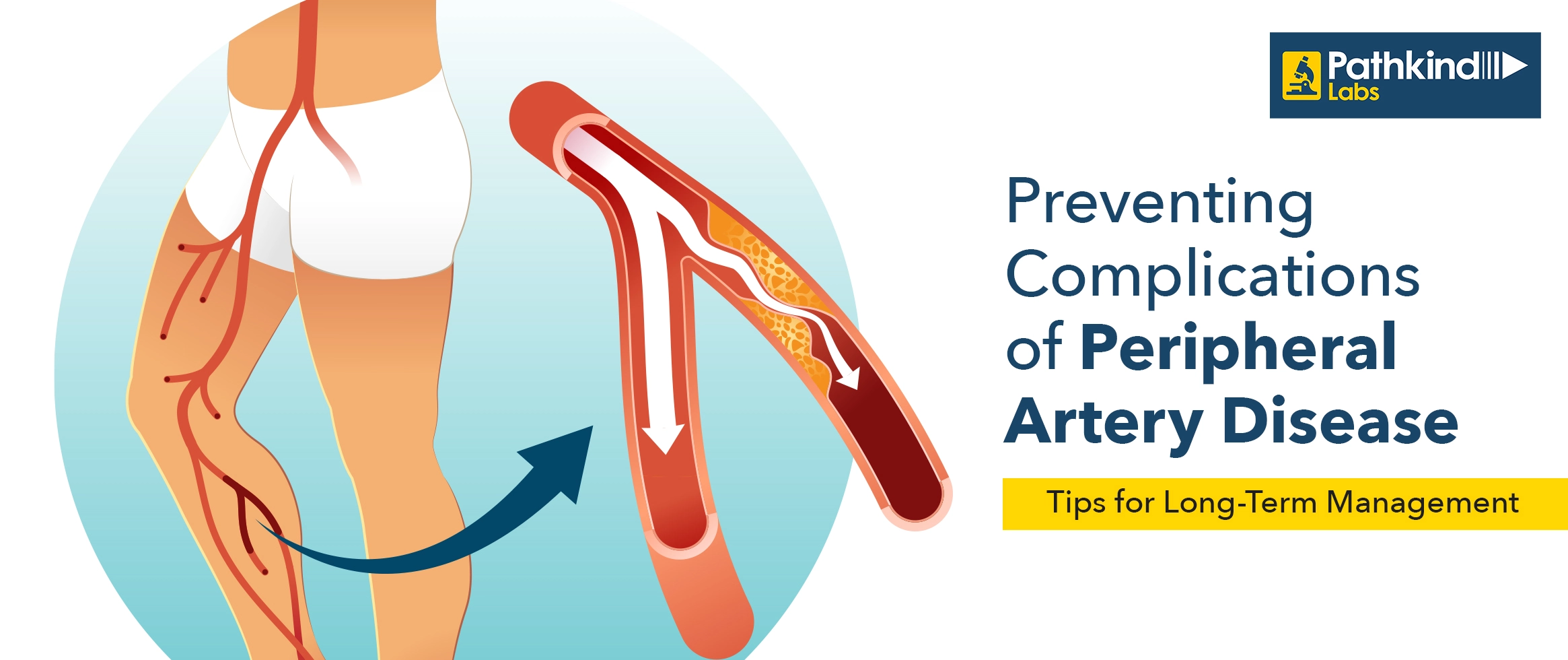
PAD or Peripheral artery disease (also known as peripheral arterial disease) is an accumulation of fats and cholesterol (atherosclerosis) in the arteries. This accumulation makes it difficult for the blood to carry oxygen and other nutrients to different parts of the body as it narrows down the arteries.
PAD is a long-term disease, and it is a major risk for heart attack and stroke. However, one can prevent it by taking certain measures.
PAD is usually caused by the accumulation of fats in the arteries. Plaque build up or blood clots act like roadblocks, narrowing or completely stopping the flow of blood. This starves the tissues for essential nutrients and oxygen, leading to damage and eventually, in severe cases, tissue death (gangrene). This often happens first in your toes and feet, farthest from the heart.
There are other less common causes that are as follows:
Most people with PAD do not usually experience any symptoms or major notice in their legs. However, people who do experience pain or discomfort may go through the following symptoms:
The risk factors of PAD are serious and regardless of gender, the person will go through the following risks:
Therefore, major risk factors involve:
There are multiple ways to diagnose PAD. They may begin by examining both of the legs.
There are other tests involved during the process. They may be as follows:
Once diagnosed, it is possible to treat Peripheral Artery Disease by the following ways:
One can prevent Peripheral Artery Disease by maintaining a healthy lifestyle. Following are some tips for the same:
Like any other disease, PAD is treatable. However, prevention is always better than cure. By following simple healthy lifestyle routines and by keeping your circulatory system running smoothly, one can prevent the risk of Peripheral Artery Disease.
Regular checkups with your doctor and early intervention are crucial for managing existing PAD and preventing complications. Attend appointments and follow the medicines prescribed by your doctor on time to avoid any risk factors mentioned above.
Don't wait until the warning signs appear, take charge of your health today and walk confidently towards a healthier future!
Discover precision diagnostics with Pathkind Labs, a trusted name in diagnostic services in India. Our NABL accredited labs, equipped with advanced technology, are staffed by a certified team of over 200+ senior pathologists and 2000+ technicians. From tailored health check-ups to specialized tests in Oncology, Neurology, Gynaecology, Nephrology, and more, we've got your health covered. Skip the hassle with online booking for tests or check-ups, available for both lab visits and at-home blood collection. For a seamless experience and early detection, choose Pathkind Labs in Gurugram. Book your appointment today and experience diagnostics made easy.
© 2026 Pathkind Diagnostics Pvt. Ltd. All Rights Reserved | Unsubscribe







Welcome to our Chatbot! Want help getting started?